
Home Ventilation Systems

Managing Moisture and Airflow in Your Home
Effective home ventilation helps replace stale indoor air with a controlled supply of fresh air from outside. By maintaining steady airflow, ventilation systems support a healthier and more comfortable living environment.
Without adequate ventilation, moisture can build up inside the property, leading to condensation, damp patches and, over time, mould growth. Poor airflow can also allow pollutants, allergens and everyday household contaminants to linger in the air.
Modern home ventilation systems are designed to manage humidity levels, improve air circulation and help maintain consistent indoor air quality throughout the year.

Arrange a Free Site Survey
Book a site visit and one of our qualified engineers will assess your property and recommend the most suitable ventilation solution for your space.
Positive Input Ventilation by Nuaire
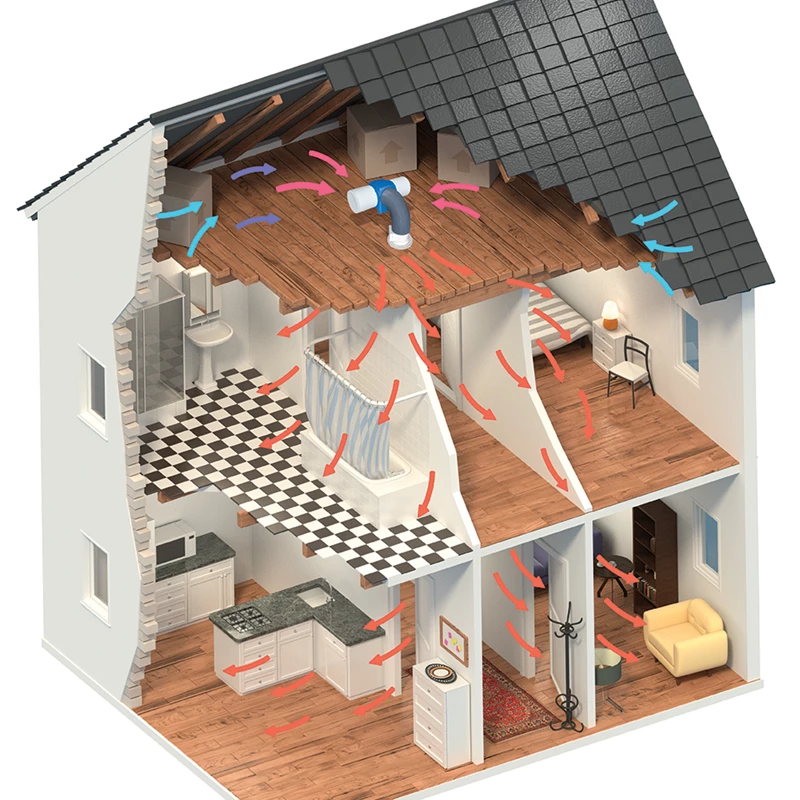
Positive Input Ventilation (PIV) is a whole-house ventilation system commonly installed in the loft space. Developed by Nuaire, PIV units draw fresh air from outside, filter it, and gently introduce it into the home through a discreet ceiling diffuser.
By supplying a steady flow of filtered air, the system helps dilute stale indoor air and manage moisture levels. This slight positive pressure encourages excess humidity and airborne pollutants to move out of the property through natural leakage points.
PIV systems are typically straightforward to install and offer a cost-effective solution for homes experiencing condensation, mould or poor airflow.

Trusted Nuaire Installers in Gloucester
As well as keeping your home at a comfortable temperature with air conditioning, we can make sure the air inside it stays fresh and healthy. That’s why we install ventilation systems by Nuaire, the British manufacturer that invented Positive Input Ventilation and has been designing and building ventilation in the UK for 60 years.
Mechanical Ventilation with Heat Recovery
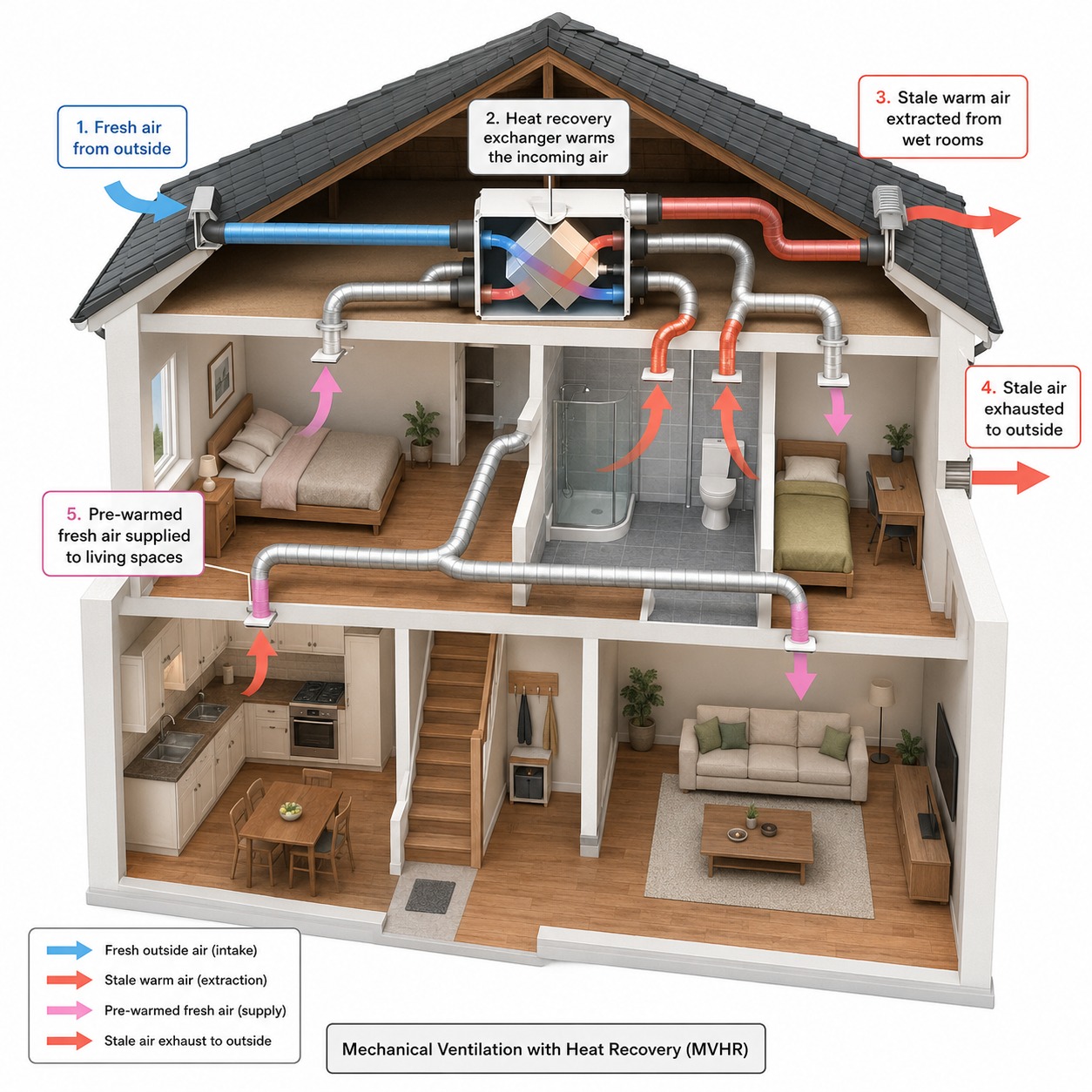
With Mechanical Ventilation with Heat Recovery (MVHR), one central system ventilates your whole home. Vents in your kitchen and bathrooms remove humid, stale air, while vents in bedrooms and living rooms supply fresh air that has been filtered on its way in. Both airflows pass through a Nuaire MRXBOX unit, where heat from the departing air is transferred to the fresh supply without the two ever mixing. The result is a home that’s continuously refreshed but stays warm and cosy.
If you’re planning a new build, extension or renovation in Gloucester or the surrounding area, MVHR is a great way to make your home healthier and more efficient for the long term.
Benefits of Indoor Ventilation
Drier Air, Less Mould
PIV and MVHR both remove excess moisture before it has a chance to settle. This keeps your windows clear of condensation and stops mould from appearing on walls, ceilings and in corners.
Cleaner Air to Breathe
Filters catch dust, pollen and outdoor pollutants before they get inside, so the air in your home is cleaner. Many people with allergies or asthma notice the difference.
Lower Heating Costs
It takes less energy to heat dry air than damp air, which helps keep your heating bills down. MVHR adds extra savings by recovering heat that would normally be lost.
Looks After Your Property
Left unchecked, damp can lead to peeling paint, damaged plaster and musty furniture. Proper ventilation tackles the cause and helps protect the value of your home.
Ventilates Your Home
Fresh air keeps moving through your home even when the windows are shut. You can keep out the cold, the noise and the pollen while your home stays secure.
Runs Quietly & Efficiently
Once fitted, Nuaire units run so quietly you’ll hardly know they’re on. Cleaning or replacing the filter every so often is usually all the upkeep they need.
Comparing PIV and MVHR
PIV and MVHR both improve air quality and tackle damp, but they’re designed for different kinds of homes. Use the table below to see how they compare.
| PIV | MVHR | |
|---|---|---|
| Ventilation method | Supplies filtered air from one central point, creating gentle pressure that pushes moisture out | Extracts air from wet rooms and supplies filtered air to living spaces |
| What’s installed | A loft unit and ceiling diffuser, or a wall unit for flats | A central unit plus ductwork and vents in each room |
| Heat recovery | Not included | Included |
| Installation | Short, with minimal disruption | Longer, best done during building work |
| Investment | Lower upfront cost | Higher upfront cost, with lower heating bills over time |
| Most suitable for | Older homes, period properties and lettings | Newly built, extended or renovated homes |
| Reduces condensation and mould | Yes | Yes |
Not sure which way to go? Our team can visit your home for a free site survey and give you an honest recommendation.
How Our Home Ventilation Installation Works
1. Initial Enquiry
Get in touch and we’ll discuss your property, any condensation or airflow issues you’re experiencing, and whether a ventilation system such as PIV may be suitable.
2. Property Assessment
One of our engineers will visit your home to assess loft space, layout and overall suitability for the proposed ventilation system.
3. Clear Quotation
We’ll provide a free, no-obligation quote outlining the recommended system and installation cost before any work begins.
4. Professional Installation
Once approved, our installation team will fit the ventilation unit efficiently and ensure it is set up correctly for effective long-term performance.
Our Air Conditioning Brands





Our Testimonials
Kind words from our satisfied customers
Posted on Google
 Abigail Smart9 October 2026
 Had a ducted air conditioning system installed at my property and I am so pleased with it. The team were really helpful and professional, and I definitely feel I've made the right choice upgrading to air conditioning. Thanks so much. I would happily recommend Bristol Air Conditioning to anyone looking to do the same.Posted on Google
 sara edwards29 September 20265 star from start to finish! Do not hesitate to get Bristol AC in! They were friendly, professional and experts from the start. Tried a couple of national AC companies before I found these guys and so glad I waited, they have nothing on Bristol AC. Great job on the install by Robbie and Russ as well as super support from the rest of the team in the site survey all the way through to payment.Posted on Google
 mircea-sorin pavel23 September 2026I’ve had air conditioning system fitted by Robbie and Ross from Bristol air conditioning ltd. The lads have done a great job, very polite and helpful. Truly recommend this company.Posted on Google
 myfi williams21 August 2026Faultless. Richard was great and the job was completed quicker than I expected. Everything was explained well to me. Would definitely recommend!Posted on Google
 Beth Jenkins14 August 2026Had our air conditioning fitted Wednesday by Bristol Air Con - superb service, Jake, Jack and Jack were excellent, and did a great job!Posted on Google
 Matt nolan13 August 2026Just had an AC system installed at home by Bristol Air Conditioning and very happy and impressed by the whole process. When I initially looked into getting a home AC system, there was a lot of conflicting information and advice. As soon as Jason visited our house I was impressed by his knowledge, ideas, and honesty. He came up with ideas that minimised external trunking runs(which I was concerned about) and the best system to suit our needs. We have ended up with two wall mounted units, and two floor mounted units which work extremely well. The fitting crew were brilliant and friendly, and did an excellent job of the installation leaving all rooms clean and tidy. Overall very impressed, and would highly recommend.Posted on Google
 Lorraine Hill12 August 2026These guys were great. Very helpful and professional. From survey to installation everything went perfectly. Really pleased and would definitely recommend.Posted on Google
 Anne Lane7 August 2026Very professional came on time specified cleaned up as they went made sure everything was in working order would definitely recommend to put air conditioning in very happy with the jobPosted on Google
 Rob21 July 2026Finally found the right firm for AirCon install. After years of looking, researching and receiving quotes from a number of companies, we eventually found Jason and the team. And I’m so glad we did. From the moment I met Jason to the hand over, his team have been excellent to work with. Professional, friendly and knowledgeable throughout, the team respected our home and fitted a brilliant Airzone Ducted system which is keeping us cool. Thank you, highly recommended.Posted on Google
 Clive Birnie3 July 2026Faultless service. Great guys. Made the install a clean and efficient process followed by a thorough briefing on operation of the unit. Would recommend.Posted on Google
 Richard Burden23 June 2026Had a really good experience with Bristol Air Conditioning, from initial emails with Jason, to the install by Rich and Jack. Both guys were friendly and communicated well about the minor modifications to the initial proposal due to the nature of my property. Install was completed by the time estimate given on the day. Really pleased with the neat install of the indoor unit (no trunking visible internally) and hugely impressed by the power and quiet operation of the indoor unit, that is managing to have a cooling affect throughout the house, despite being on the top floor. Would recommend them to others.Posted on Google
 Farida Faouri15 June 2026In my job I deal with so many various contractors every single day, but I have to say Bristol Air Conditioning are the most professional company I have ever dealt with. The owner who quoted me for the job was friendly and approachable, and then Richard who fitted my unit was also so helpful and patient with instructions how to use and maintain my aircon. I highly recommend them to anyone!Posted on Google
 Ajay Mehta28 May 2026The two engineers installing the air conditioning were friendly, knowledgeable and did a great job. The AC is working perfectly and has made a massive difference to our loft bedroom. Would use againPosted on Google
 Gillian Edbrooke13 May 2026What a great service. The team that came to install were lovely. Fantastic service, fantastic team and we are so pleased. If you are thinking about air conditioning you won’t find a better company.Posted on Google
 JGW91113 May 2026Excellent experience with Bristol Air Conditioning. Initial system design and layout by Jason was very good, minimising trunking on internal walls (unlike our other quote). Price was competitive for good quality units. Luke and Jack were brilliant on the two installation days - turned up when they said they would, worked very efficiently and tidily, explained the system controls to me after it was up and running. The end result is excellent and looks extremely professional. As of early May we’ve already used it to cool a little but this week with some unseasonably low temperatures we’ve also used the lounge unit to provide some warmth first thing in the morning. The system is incredibly responsive. Looking forward to using it when we have our first summer heatwave of 2026!Posted on Google
 Caitlin Burton9 May 2026They were fab. Very professional and installed our air con over just a few days. All the engineers were very friendly and happy to explain what they were doing/how to use the system etc. Overall I highly recommend BAC if you are looking to have air con installed in your property! Our house is so cool now!Posted on Google
 nullscott8 May 2026Had my house fitted with air conditioning by Rich and his team, couldn't be happier with the result. Even with supplier issues they still managed to complete the work in under two days. Highly recommend them to anyone looking for a professional installation.Posted on Google
 Matt Gates25 April 2026From start to finish Jason, Luke, Jake and Jack were professional and fantastic. Very happy, 5 stars and thank you.Posted on Google
 ian simpson19 April 2026Bristol Air Conditioning came to me as recommended by a work colleague. There service was 5 star, from first contact to shaking Rich’s hand as he left after installation. Jason came to conduct the survey and not a WhatsApp/ FaceTime video call as others. There was zero hard sell and was totally accommodating, his BAC quote was very competitive. I had two units fitted in two bedrooms, this took two days and Rich was very efficient and helpful as was the rest of the team that supported the instal. As summers get warmer, and you start to think about AC in the house, there is only one place to go to Bristol Air Conditioning. Thank you.Posted on Google
 Dan Garty7 April 2026Excellent service from these guys, overcame obstacles with professionalism and provided options, with no pressure. Wish all companies were like this to deal with, special call out to Jason for managing to source the unit where other companies couldn't and the install engineers (think his name was Luke), very tidy work and genuine nice guy. If you are on the fence looking for a professional, competitive, reliable company, Bristol Air Con/ Gas Safe are fantastic and I highly recommend them

FAQs
Positive Input Ventilation (PIV) systems help manage indoor humidity by improving airflow and reducing excess moisture within the property. By lowering humidity levels, they can significantly reduce the conditions that allow condensation and mould to develop.
However, PIV addresses moisture and ventilation issues rather than structural problems. If mould is caused by leaks, insulation defects or other building faults, these will need to be resolved separately.
PIV systems are designed to operate quietly and are typically installed in the loft space, which helps minimise any noticeable sound within the home.
When correctly installed and set up, the unit runs at a low level and is generally unobtrusive during normal operation.
Positive Input Ventilation (PIV) systems help manage indoor humidity by introducing a steady supply of fresh, filtered air into the home. This continuous airflow helps dilute moist air and reduce the build-up of condensation.
By improving overall ventilation, PIV systems can lower excess humidity levels and support a drier, more comfortable indoor environment.
It can be. MVHR is most straightforward in new builds and renovations, but plenty of existing homes can accommodate the ductwork, often through the loft. We’ll assess your property during our free site survey and let you know.
It shouldn’t. Nuaire MVHR units have a summer bypass that sends fresh air around the heat exchanger rather than through it, so you’re not adding warmth to your home when it’s already hot outside.